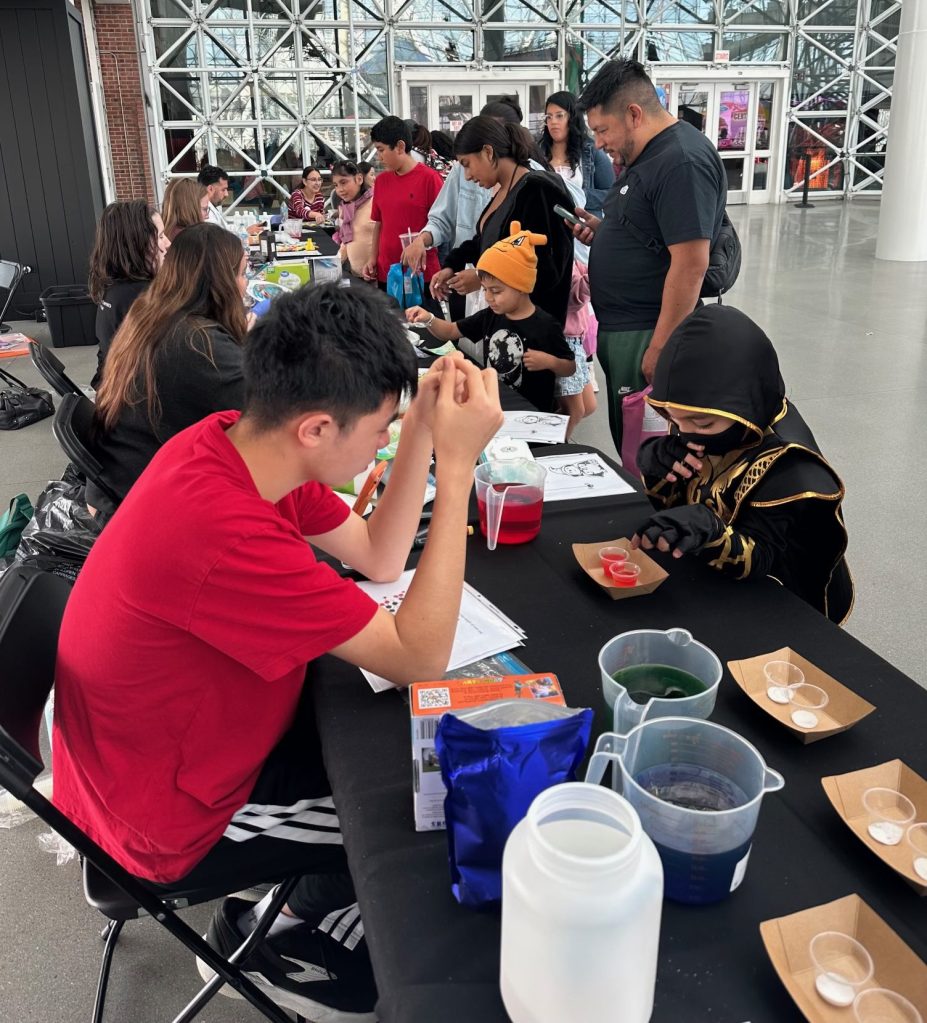
While other teenagers my age during the weekend would be hanging out with friends, rotting in bed and doomscrolling or grinding video games, I actually took this opporunity to help my community by volunteering for an ACS event for National Chemistry Week (October 18-24) from 1pm to 5pm
I went to Navy Pier on Saturday, October 24 to help ACS set up and carry out stations for an Halloween event. Our station was called: Expanding powders. The first step of this station was to put 2 different powders in small cups: the left one being sodium polyacrylate (C3H3NaO2)n and the right one just being regular fake snow.
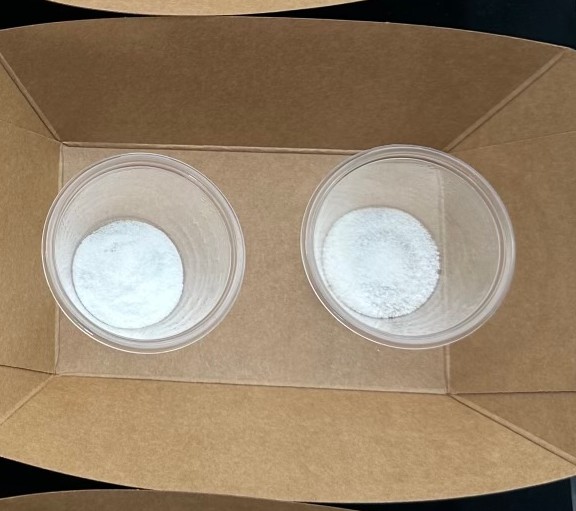
Then we (since it was 2 people per station and I was working with my mom) added water with food coloring (the children got to choose from red, green and blue. Around 45% chose blue, 40% chose red and 15% chose green) and lectured (in simple terms of course, they’re too young to find any of this information useful for their life) (Side note: oldest kid was a freshmen in high school but 80% of them were under 5th grade with the youngest not being able to walk) them on how they reacted differently.
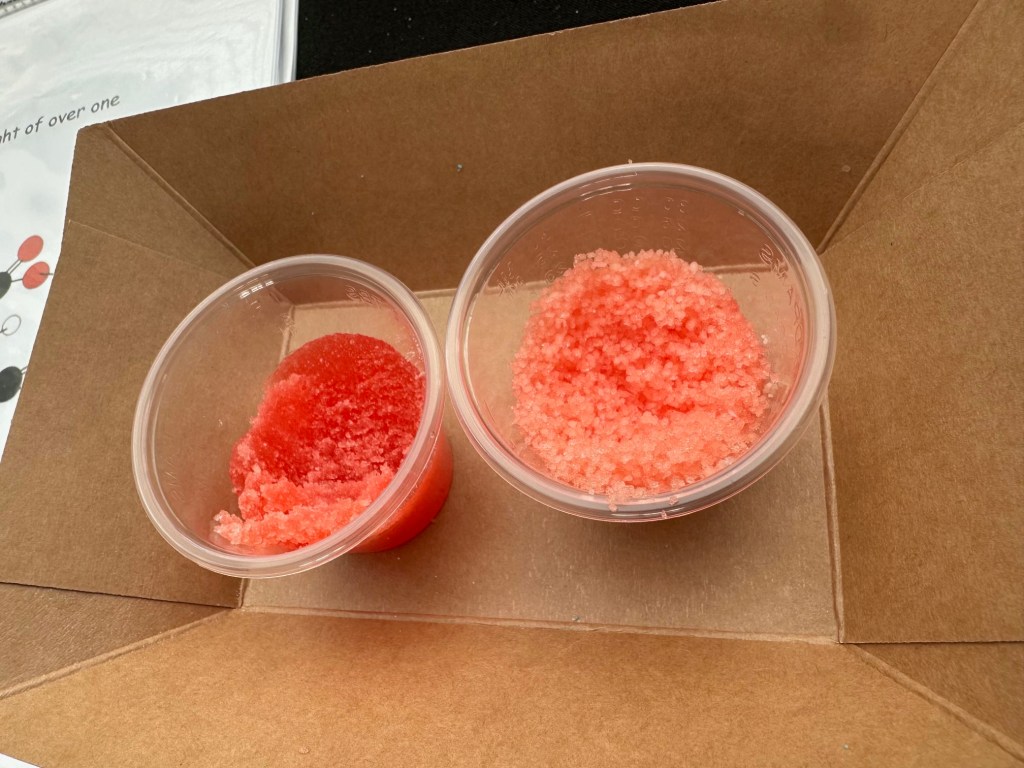
The chemistry behind this is that both sodium polyacrylate and the fake snow are both absorbents but Sodium polyacrylate is a superabsorbent polymer while fake snow absorbs the water less effectively. Sodium polyacrylate contains both positive Na+ ions and negatively charged carboxylate groups (-COO–) and when water is added to it, it pushes the Na+ ions aside and surrounds the carboxylate groups which makes the polymer (large molecules made up of many repeating chemical subunits) chains to swell into a clear, rubbery gel (75% of the kids said it felt like slime, 20% said it felt like jelly and 5% said it felt disgusting) and take up more of the cup. It can absorb 100x its molecular weight! The fake snow has similar properties (the molecular formula wasn’t given) but has less carboxylate groups. Naturally, the sodium polyacrylate reacted in 3 seconds (i counted with my fingers: 1, 2, 3…) while the fake snow took up to 15 seconds which is consistent with the information. As fake snow is weaker at absorbing the water and its color, its color is lighter than sodium polyacrylate gel.
As for the feel, around 60% of the kids liked the fake snow while 40% like the sodium polyacrylate gel. This was interesting because fake snow is fluffier and feels softer than the gel, which felt slippery and squishy. I would expected a greater majority for the fake snow.
Finally, we would ask them if they wanted to keep their powders which 95% wanted to. We put each of the finished cups into its own bag and handed it over to them. Obviously most of them wouldn’t think about this, but we told them not to get any of these in your eyes or swallow them (duh). We also told them not to swallow it or inhale it and to repeat the lab, they had to dehydrate the powders and add water again to them (although it may make the powder have a different texture, and it will likely not remove the food coloring). Finally, we told them that mixing them is not encouraged as it will look inconsistent and feel weird
A very enjoyable event that helped my social anxiety and talk to young kids better while indulging me in the wonders of chemistry.
If you, the reader, want to also volunteer for ACS, then here is the link to sign up; https://lookup.acs.org/?searchType=ls. First enter where you are located and then it will prompt you to fill a mini form so they can see your request (or you can email service@acs.org for more general questions).
Thanks for reading!


Leave a Reply